 Printed on: October 8th, 2026
This Pearl is provided as free content. Here is the link to our terms of use
Bedbugs
Bedbug infestations have increased dramatically in the past 30 years, partly due to increased global travel but also because of developing resistance to insecticides. In primary care, it can be difficult to distinguish bedbug bites from other insect bites, and suggestive skin lesions should prompt thorough examination of the home/possessions for evidence of bedbugs (NEJM 2020;382:2230).
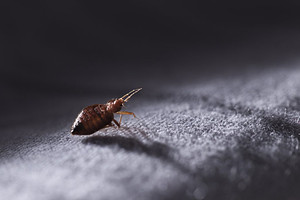
Bedbugs are fast moving, and rapidly reproducing, flat brown insects. Adults are about the size of an apple pip (5– 7mm long). They cannot fly or jump. They feed on human blood and are mainly nocturnal.
Bedbugs can hide in clothing, textiles, bedding, mattresses, bedframes, furniture, behind wallpaper and inside electrical sockets and ducting.
Diagnosis
- Bites are usually painless, and occur on exposed skin areas such as arms, legs, feet, face and neck.
- Pruritic, maculo-papular, erythematous spots 2–5mm in diameter, usually without a central visible punctum. The bite usually appears immediately but can take 1–2 days to show.
- Bites tend to occur in a straight or zigzag line, or 3–5 bites in clusters: the breakfast, lunch and dinner sign (although other insect bites can also have this pattern).
Complications
- Pruritus.
- Urticaria.
- Secondary skin infections from scratching.
- Insomnia.
- Psychological distress: shame and social isolation can be significant.
What to look for in the home?
This is a job for professionals: advise your patient to get their home thoroughly checked for evidence of bedbugs if you suspect they have bedbug bites. Bedbug traps might help identify a low-level infestation but will never eradicate them fully.
Signs might include:
- Dark faecal spots in mattress crevices.
- Visible exoskeletons in crevices (common locations listed above).
- A musty sweet smell.
Management
| Your patient | Their home |
|
|
 |
Bedbugs
|
This information is for use by clinicians for individual educational purposes, and should be used only within the context of the scope of your personal practice. It should not be shared or used for commercial purposes. If you wish to use our content for group or commercial purposes, you must contact us at sales@red-whale.co.uk to discuss licensing, otherwise you may be infringing our intellectual property rights.
Although we make reasonable efforts to update and check the information in our content is accurate at the date of publication or presentation, we make no representations, warranties or guarantees, whether express or implied, that the information in our products is accurate, complete or up to date.
This content is, of necessity, of a brief and general nature, and this should not replace your own good clinical judgment or be regarded as a substitute for taking professional advice in appropriate circumstances. In particular, check drug doses, side effects and interactions with the British National Formulary. Save insofar as any such liability cannot be excluded at law, we do not accept any liability for loss of any type caused by reliance on the information in these pages.
Here is the link to our terms of use.