
 Printed on: October 23rd, 2026
This Pearl is provided as free content. Here is the link to our terms of use
Supporting behaviour change
Supporting people to change their behaviour to improve their health and wellbeing is part of the continuum of supported self-management and health-coaching approaches.
Interventions in primary care can be brief or extended, but using specific techniques and skills can make a real difference to patients making changes in behaviour that can influence both mental and physical health. This article is constructed from a range of resources including BMJ 2010;340:c1900 and Journal of Holistic Healthcare 2019;16(2):19.
This article was updated in April 2025.
When should we use behaviour change techniques?
We need to choose our moment! People will not always be open or ready to make a behaviour change that involves a major commitment or effort. Capturing this moment is sometimes called a ‘teachable moment’, but is perhaps better thought of as an ‘inspirational moment’. It’s the time that you capture the person’s imagination and inspire them to recognise that change is possible.
|
Examples of an ‘inspirational moment’ in action:
|
Is the person ready to change?
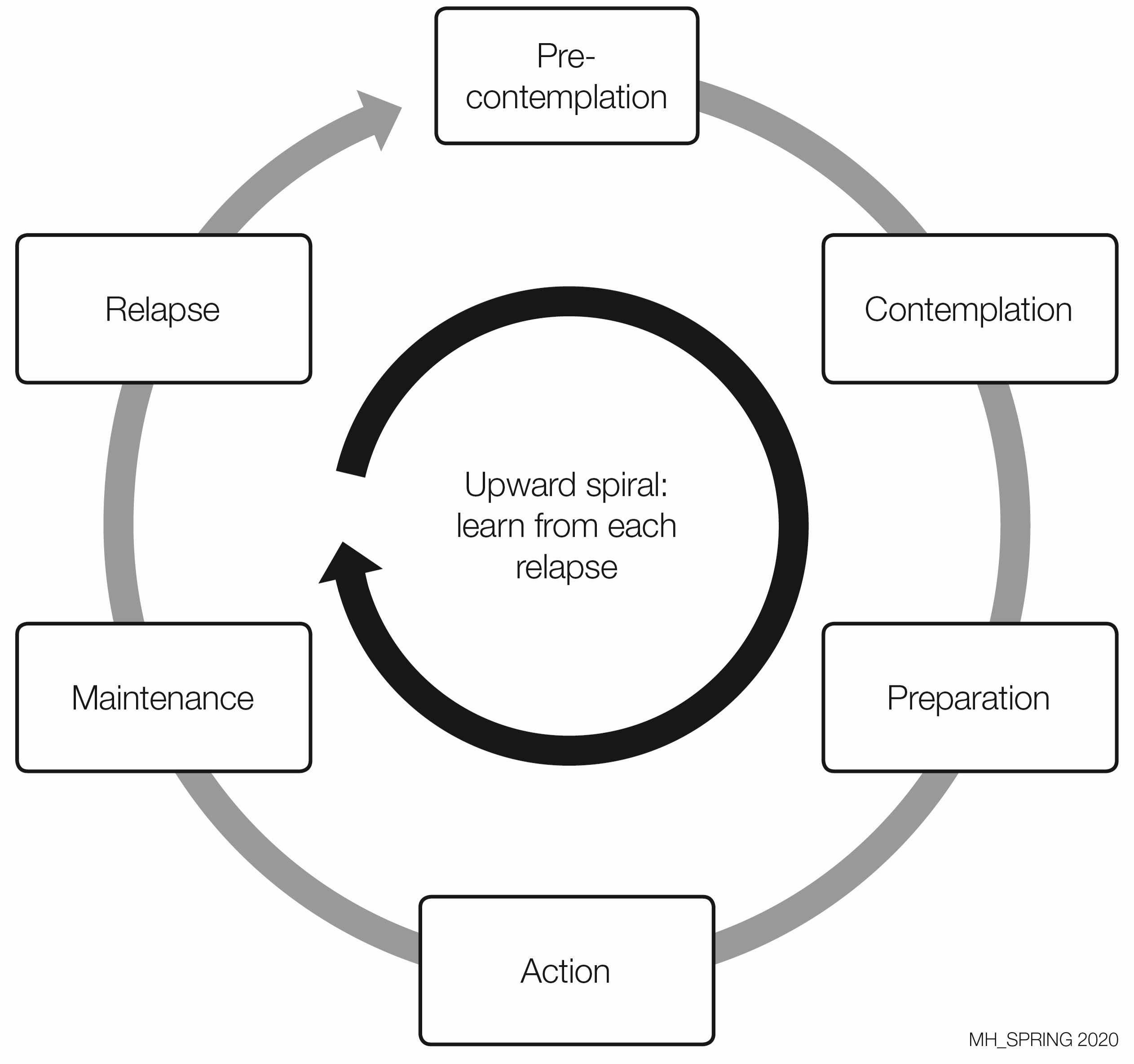
Have you ever had the feeling of ‘banging your head against a wall’ when suggesting that people make changes in their lives? The stages of change model (also called the transtheoretical model) can be used to think about whether a person is ready to make any kind of life change.
While there is no clear evidence that people follow this process of change in a linear or step-by-step way, this model can still be helpful in deciding what kinds of interventions are likely to be useful for a particular patient, depending on what stage they are currently in.
For example, if a person is in the pre-contemplation stage, attempting to set goals or targets for change is likely to fall on deaf ears and lead to frustration on both sides.
The following table gives some ideas of what we can do at different stages in the process (Transtheoretical model of behaviour change: Cambridge Handbook of Psychology, Health and Medicine (Cambridge University Press; 2007:228)):
| Stage of change | What is the person thinking and doing? | What can we do to help? |
|
Pre-contemplation (I’m not ready) |
Not planning to change behaviour. Unaware or may ignore or dismiss evidence of the need to change.
|
Raise doubt, and increase perception of risks and problems with their current behaviour. Harm reduction strategies (e.g. optimise treatment for COPD or diabetes).
|
|
Contemplation (I’m thinking about getting ready)
|
The person is aware there is a problem and is thinking about making a change, but is not yet committed to carrying it out.
|
Provide or signpost to relevant information. Explore the pros and cons of change, ambivalence and alternatives. Build confidence in ability to make change.
|
|
Preparation (I’m getting ready) |
The person has realised that there is a need to change but is not sure how to do it. This stage involves gathering information and planning how to make the change.
|
Facilitate informed decision-making about different approaches to making a change. Encourage clear goal-setting and making a realistic plan for change in small steps.
|
|
Action (I’m ready! I’m making a change) |
The individual takes action and carries out a change in behaviour.
|
Offer acknowledgement and encouragement for the effort made. Encourage the person to monitor and record the changes, and notice any benefits from changing.
|
|
Maintenance (I’m sticking to it) |
Building habits and maintaining the new behaviour over time.
|
Talk about ways to keep up the changes.
|
|
Relapse (I’m learning from when things go wrong) |
Falling back into old habits or patterns of behaviour.
|
Review and discuss what went wrong. Support, encourage and motivate to overcome feelings of being stuck or demoralised. Revisit contemplation phase and preparation phases.
|
Brief interventions
NICE recommends that all healthcare staff be supported to use brief intervention strategies in their day-to-day interactions with patients to help improve their wellbeing (NICE 2014, PH49).
- Brief interventions are succinct, one-to-one engagements that aim to prompt behaviour change by informing individuals of the risks associated with unhealthy habits and providing practical strategies for change (Health Soc. Care Community 2023;2928228).
NICE recommends using an ‘ask, advise, assist’ structure that draws on core behaviour change techniques such as providing personalised feedback, encouraging the individual’s own responsibility for change and boosting self-efficacy.
The intervention might last anywhere from 30 seconds to 30 minutes. It might be as simple as raising awareness of risks and signposting to further information, or may involve referral for further interventions or more intensive support.
- Brief interventions targeting smoking behaviour have shown modest improvements in abstinence rates, ranging from approximately 3.9% to 5.7% at 6-month follow-up (Health Soc. Care Community 2023;2928228).
- Practitioner-delivered and digital brief interventions have both demonstrated statistically significant reductions in alcohol consumption in patients from lower socioeconomic backgrounds (Curr Addict Rep 2018;5:265).
The standalone impact of brief interventions may be limited when compared with more intensive strategies, but they are a cost-effective and pragmatic approach to behaviour change in a busy world. Each brief intervention conversation presents an opportunity for us to catch that elusive ‘inspirational moment’ for real change, when we can perhaps move towards one of the more intensive models outlined below.
Models for behaviour change: STOPIT and GRIN
There is a limited evidence base for us to turn to when looking for a structured approach to behaviour change. Below, we have outlined two useful models developed within the UK which the Red Whale team have found helpful.
STOPIT
The STOPIT model is a structured framework designed to guide coaching conversations in a systematic, client-centered way. Originally developed by Peak Health Coaching Ltd, it helps practitioners lead clients from recognising the need for change to taking concrete steps toward their goals. The model is especially useful in medical education and health coaching, where clear, empathetic communication is key.
Below is an easy-to-understand breakdown of the STOPIT model, along with sample coaching questions for each phase:
| Phase | Purpose | Example questions |
| Signs | Help the client recognise the triggers or signals indicating that change might be needed. |
What would you like to think about? What’s important to you about making a change? What else is important? Is there anything else? There may not be anything, but just checking, is there anything else that’s important about this for you? |
| Tell | Invite the client to consider supportive input from trusted people, and reflect on how others might view their situation. | What would someone you trust say about this change? Can you imagine what they might say in their own words? Is there anyone else who could support you? |
| Outcome | Clarify the client’s goal by defining a positive, specific and realistic outcome. | What is the specific outcome you want? When you’ve achieved this, how will you know? What will you notice? Imagine you’ve reached your goal – how does that feel? How good does it feel to have achieved your goal? |
| Prevent | Identify potential obstacles or assumptions that might prevent the achievement of the desired outcome. |
What might prevent you from achieving your outcome? If assumptions come to light… What could you credibly assume instead that could help you towards your outcome? |
| Ideas |
Brainstorm actionable strategies to overcome obstacles and move toward the outcome. Consider generating ideas using the TOY framework:
|
What ideas have you got to achieve your outcome? There may not be anything else, but I’m just checking, can you think of any other ideas that would achieve…? (If people say, I’ll TRY, perhaps ask: I’m just wondering how confident you are to achieve that?) |
| Time | Determine which idea to implement first and set a realistic timeframe for action. | Out of all these ideas, which would you like to start with? When would be the best time to start this? How does it feel to take that first step? |
For healthcare professionals, incorporating the STOPIT model into practice can help in the following ways:
- Enhancing patient engagement by using open-ended questions, which encourages patients to explore their own motivations for change.
- Improving outcome clarity by defining clear, measurable goals, which ensures that patients and healthcare providers are aligned in their efforts.
- Addressing barriers effectively by exploring obstacles and assumptions, which helps pre-empt potential setbacks and leads to more sustainable health behaviour changes.
The GRIN model
David Unwin’s GRIN model (J Holistic Healthcare 2019;16:2) provides an alternative approach to facilitating making changes such as lifestyle or other behaviour.
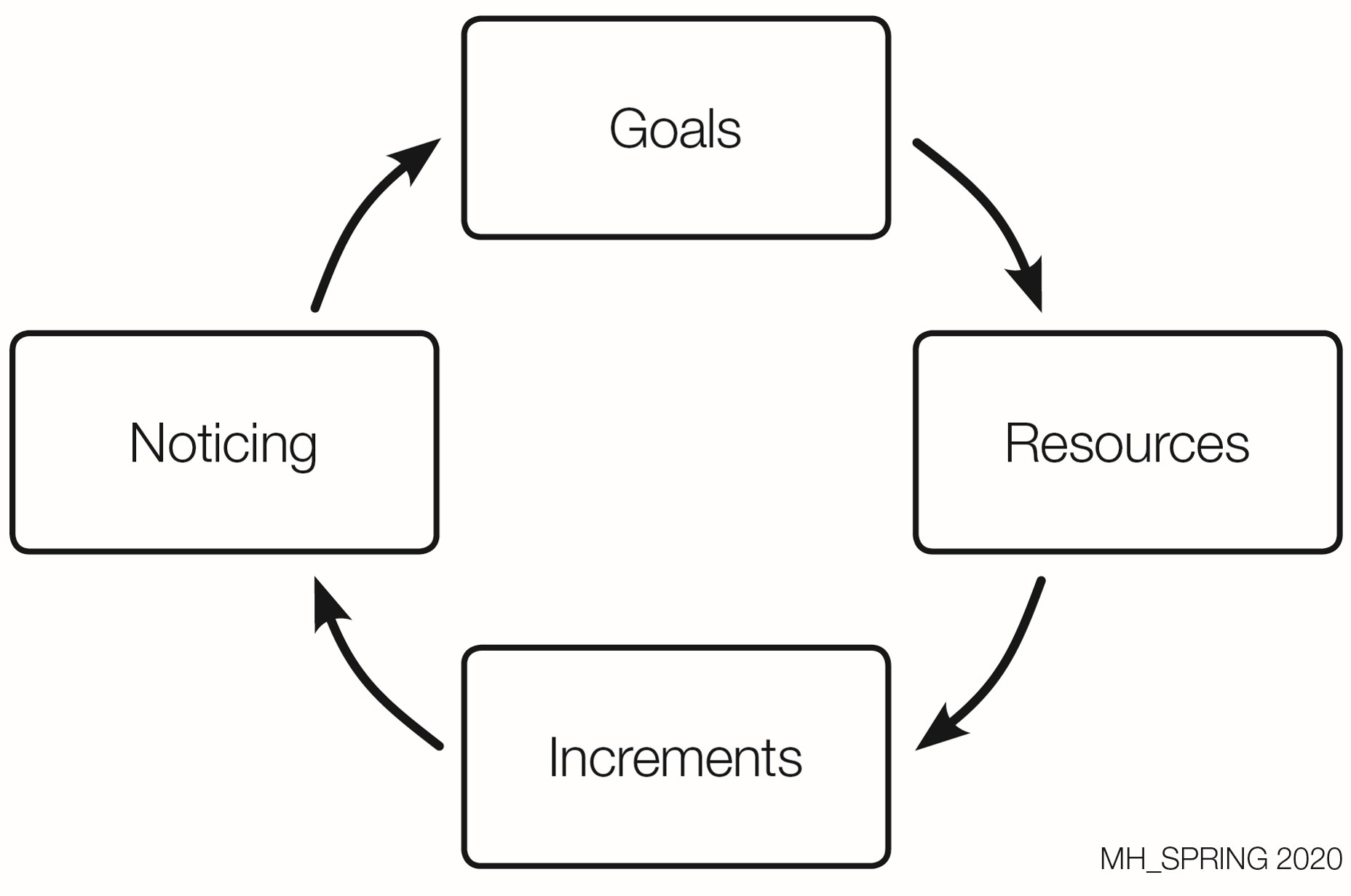
| Stage | What are we trying to achieve? | What to ask |
|
Goals
|
Agree shared health or life goals. Explore what a change might look like to the individual patient. Support and build motivation by looking at the bigger picture and the person’s individual values and goals. |
What are your best hopes for our consultation today? What difference would that make to your life? Are there any particular ways you would like things to improve? What would be different if you were feeling better one year from now….? Ask the patient to elaborate on their answers: What else…? Can you tell me more about that…? |
| Resources |
Explore relevant resources and patient resilience. Enhance the person’s belief in their ability to make changes. Explore what is already working in the patient’s life and what additional support might be available.
|
What are you already doing that helps? What do you do on a ‘good day’? Have you managed to make any other changes in the past? How did you manage to do this? How did you manage to stop smoking/lose weight previously? Who are you getting support or help from with making this change? Who else might be able to help? What strengths or qualities do you have that might help? |
| Increments |
Agree next small increments towards agreed goals. Plan and commit to some specific ‘small steps’ to making a change.
|
What would be a small sign that you are making progress? What would a friend or family member notice? Bearing in mind your goal, can you think of a small change that you can make before we meet next time? How confident are you that you can make this change on a scale of 1–10? (aim for at least 8 or above) How could you make your goal smaller or more manageable? What else could you try? |
| Noticing |
On review, notice and reflect on what is working. Give sincere compliments for any successes, no matter how small. Use problem-solving strategies to address difficulties or lack of progress.
|
How did you get on with the action that we agreed last time? What has worked well for you? What has changed since we last met? What difference has that made to you? Has anyone else noticed a change? Wow! That is amazing, well done! Look at this improvement in your results…! Tell me more about what’s been happening… Has anything been difficult or challenging? How might you overcome this next time? What else…? |
Why is changing behaviour difficult?
Making change is not easy! Even if we believe that a change is very important, it can be difficult to follow through with it and stick to it over time. We have all struggled to stick to a healthy diet or a new exercise regimen. There are many factors, both personal and environmental, that can get in the way of making successful changes in behaviour. These include:
- Not understanding or agreeing with the reasons to change.
- Financial barriers.
- Lack of time.
- Being around other people who make it difficult to change.
- Not having the skills or knowledge to make the change.
- Emotional factors such as low mood, anxiety or lack of motivation.
- Lack of confidence in our ability to change.
Many people often experience ambivalence to change. They feel uncertain about the change, and may have conflicting feelings about the process and outcomes of making a change.

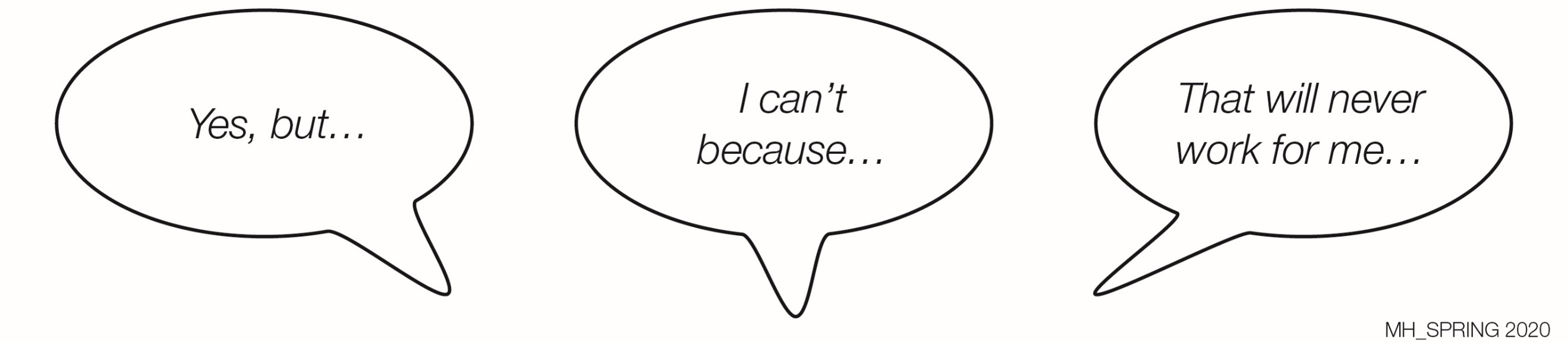
If we simply give advice and tell people what to do without acknowledging or discussing their ambivalence to change, we are likely to trigger resistance and lead to people finding even more reasons why they are unable to change:
Motivational interviewing: overcoming resistance to change
Motivational interviewing involves a set of communication skills designed to enable health professionals to effectively talk to people about change. It recognises that ambivalence to change is normal, and has the aim of helping people develop their own desire to make change (internal motivation). When faced by resistance to change, motivational interviewing might ask patients to consider their own arguments for making a change, rather than informing or telling them what to do – which risks triggering further resistance.
A systematic review and meta-analysis exploring the impact of motivational interviewing to support increased physical activity levels found that it was superior to other behavioural interventions, both in terms of increased activity and reduced sedentary time, but its effects attenuated over time; there was little evidence of continued impact after 1 year (BMJ 2024;386:e078713). This suggests the importance of longer-term engagement if we are to see sustained behaviour change.
Some of the core principles of motivational interviewing:
- The process of change involves listening to and understanding the individual’s own perspective.
- People should be actively engaged in the process of change, and find their own answers for solving problems.
- Directive approaches such as giving advice, convincing or telling people to change are ineffective, and likely to generate increased resistance to change.
- Advice can act as a ‘vice’, stopping the patient from generating their own ideas. Instead, consider using the TOY framework, outlined in the table above, when looking to generate actionable ideas.
Remember, when facilitating behaviour change, we are carrying out strategies that might ignite a spark that encourages the patient to make their own changes. Even if the person is not quite ready to make a change immediately, this type of conversation may still have long-term benefit when they do feel ready to commit to change.
There are many different models used to describe motivational interviewing. Some of the core communication skills used are listed in the following table:
| Skill | What does this involve? | What can you say? |
| Active and reflective listening |
Use open questions to develop understanding and clarity, and get detailed information about the person’s perspective. Explore the patient’s motivation and readiness for change. Listen and respond rather than directing the conversation. Use non-judgemental language. Reflect back and summarise what you have heard them say. This shows that you are listening to the person’s perspective and take it seriously. |
Tell me about… What are your main thoughts and concerns…? So it sounds like the main issues are… You have mentioned that….
|
| Engage the individual in the change process |
It is vital to fully involve the individual in the process of thinking about and making a change. Begin by finding out what the patient already knows or believes about the issue before giving any further information. Then, provide relevant information in small chunks, while continuing to check understanding after each statement (Elicit–Provide–Elicit). |
Elicit: What do you already know about healthy eating… Provide: This diet might be beneficial for you because… Elicit: What do you make of this? How might you use this information to help you? What’s your opinion or the next step? |
| Roll with resistance |
This involves actively avoiding confrontation and reducing the likelihood of triggering resistance to change. Avoid lecturing, arguing or trying to convince the person to change. Try to resist the ‘righting reflex’ which is an urge to correct the person or provide your own solutions or suggestions. Instead, make empathic statements and reflect back what the person is telling you. Encourage them to take ownership and responsibility for the next steps. |
It sounds as if you would like to walk more but it is difficult to find the time... That sounds tricky… Perhaps you feel a bit stuck…? That sounds unpleasant.... That must be quite worrying… So you'll miss smoking with your mates…? Are there any things you won’t miss? What happens if you carry on as you are? How might you take things forwards? |
| Highlight change talk |
Change talk involves expressions of desire, reason, ability or need to make a change. Motivational interviewing involves actively looking for examples of change talk, e.g.: I guess I could cut down a bit or I know I should lose weight, but…. We can then highlight and reflect these back to the individual. |
So it sounds like you would like to be more active...? So maybe part of you is keen to change… but there are also some doubts….? Where does that leave you now...? What makes it difficult ...? Why would you want to make this change? |
| Importance of change |
Discussing the personal relevance and importance of change to the individual patient will help with the process of developing internal motivation. This may also involve highlighting any apparent conflict between the person’s values and their behaviour (developing discrepancy). |
How important is it to you to [lose weight]...? What are the three best reasons to do it? How might things be different if you...? What might be the biggest benefits of changing? Tell me what concerns you about your weight? What has smoking cost you personally? |
| Use a cost–benefit analysis | Explore the advantages and disadvantages of making a change and of keeping things the same. This helps with building motivation, and can also strengthen your relationship as you develop a deeper understanding of the factors that are affecting their ability to make change. |
What are the pros and cons of making this change? What might be the pros and cons of keeping things as they are? |
| Assess readiness to change |
It can be helpful to explicitly discuss how ready the person is to make a change. This will help you tailor your approach (see stages of change model above). |
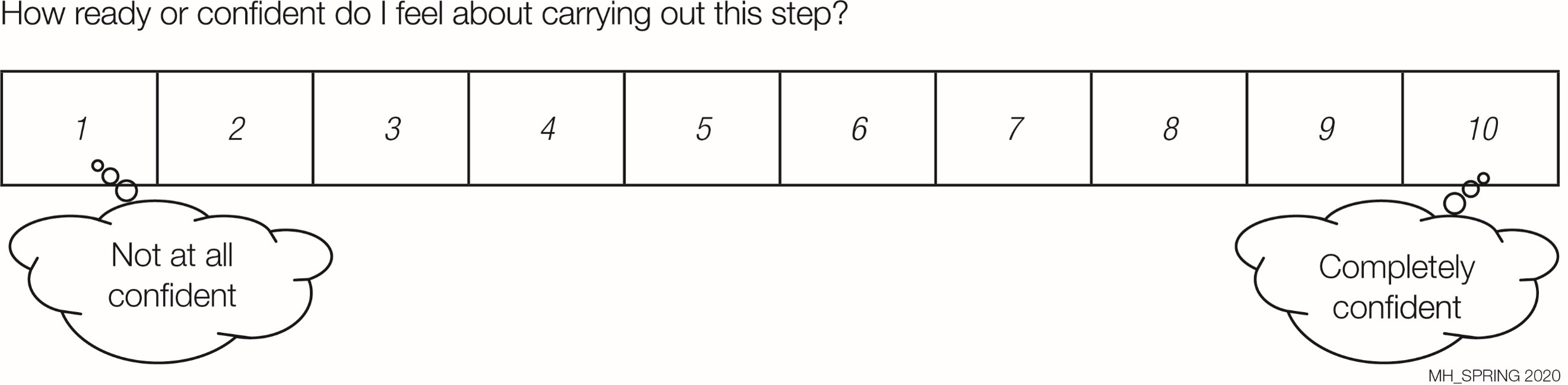
On a scale of 1 to 10, how ready are you to make a change? How confident are you that you can make this change? How important is it to you to focus on this change? What might increase your (confidence/readiness/sense of importance)? |
Here is a resource we can use to assess readiness to change and start the process:
Readiness to change?
|
What is the change that I am thinking about making?
|
|
Importance of the change: why might this change be important for me?
|
Now think about the advantages and disadvantages of making the change:
| What are the advantages of… | What are the disadvantages of…. | |
|
My current behaviour
|
||
|
Making the change
|
|
What would be one small step towards making this change?
|
|
Do I need to make the goal smaller or easier to achieve? Who could help me carry it out? How can I remember to do it?
|
Digital and mobile health interventions to aid behaviour change
NICE issued guidance on digital and mobile health interventions, including online trackers, apps and wearable devices (NG183, 2020). It looked at these in relation to diet and physical activity, smoking, alcohol intake and unsafe sexual behaviour.
NICE said that using digital or mobile interventions has the potential to:
- Address health behaviour and make positive changes to help reduce the risk of chronic diseases.
- Help people self-manage, self-monitor or improve behaviours, and improve mental, emotional and social wellbeing.
NICE acknowledged a real evidence gap in assessing the benefits of these interventions and which groups specifically may benefit the most. We explore the current evidence in our article Technology to support health and wellbeing.
 |
Supporting behaviour change
|
 |
Useful resources: Websites (all resources are hyperlinked for ease of use in Red Whale Knowledge) |
This information is for use by clinicians for individual educational purposes, and should be used only within the context of the scope of your personal practice. It should not be shared or used for commercial purposes. If you wish to use our content for group or commercial purposes, you must contact us at sales@red-whale.co.uk to discuss licensing, otherwise you may be infringing our intellectual property rights.
Although we make reasonable efforts to update and check the information in our content is accurate at the date of publication or presentation, we make no representations, warranties or guarantees, whether express or implied, that the information in our products is accurate, complete or up to date.
This content is, of necessity, of a brief and general nature, and this should not replace your own good clinical judgment or be regarded as a substitute for taking professional advice in appropriate circumstances. In particular, check drug doses, side effects and interactions with the British National Formulary. Save insofar as any such liability cannot be excluded at law, we do not accept any liability for loss of any type caused by reliance on the information in these pages.
Here is the link to our terms of use.