 Printed on: November 5th, 2026
Carbon monoxide poisoning
Not a common diagnosis but one that is often missed!
50 people a year die from carbon monoxide poisoning in the UK. Over a 12-year period, there were over 2000 admissions with unintentional carbon monoxide poisoning.
NEVER use a pulse oximeter to check for carbon monoxide poisoning as it will often be falsely high; the infrared light used by pulse oximeters does not distinguish well between oxyhaemoglobin and carboxyhaemoglobin. |
This is summarised from a BMJ review (BMJ 2019;365:l2299).
Symptoms
In acute poisoning, the symptoms have usually only been there for hours; with chronic poisoning, the history may be over weeks to months.
Few signs are very helpful: it is all about the history. Particularly look to see if symptoms are worse in certain places then resolve when away from them. The ‘cherry red’ skin tone we were all taught about at medical school is exceptionally rare!
Smokers have a higher tolerance for carbon monoxide, so symptoms may present only after substantial exposure.
| Acute CO poisoning | Chronic CO poisoning |
|
Because of how acute poisoning presents, it is often misdiagnosed as viral flu or gastroenteritis: Headache Tiredness Nausea and vomiting Abdominal pain Chest pain Generalised body pain Shortness of breath Seizures, coma and, ultimately, death |
Inattention, memory loss, fatigue Sleep disturbance Personality changes Mood changes Parkinsonism, ataxia, seizures Muscle spasms, chronic pain syndromes Tinnitus Photophobia Cardiac ischaemia |
Remember: symptoms may be intermittent, building up overnight if there is a faulty appliance in the house and then resolving as they leave the house in the morning (carbon monoxide has a relatively short half-life).
Management
If you suspect carbon monoxide poisoning:
- Give 100% oxygen via a non-rebreathe mask: this reduces the half-life of carboxyhaemoglobin from 4–6h to 40–60mins.
- NEVER use a pulse oximeter to check for carbon monoxide poisoning as it will often be falsely high; the infrared light used by pulse oximeters does not distinguish well between oxyhaemoglobin and carboxyhaemoglobin.
- Refer immediately to A&E.
- Who else at home might be affected? Do they need assessment/admission too?
Most patients will be given oxygen for 6h and then, if well, be discharged (but not back to the place with the faulty gas appliance!).
 |
Carbon monoxide poisoning
|
 |
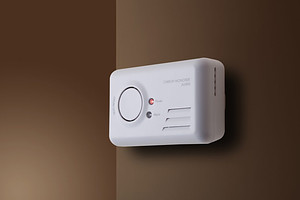
How often do you think about this as a diagnosis? Do you have a carbon monoxide detector at home? When did you last check it was working? If you have a fuel-burning appliance at work, do you also have a carbon monoxide detector? When did you last check it was working? |
This information is for use by clinicians for individual educational purposes, and should be used only within the context of the scope of your personal practice. It should not be shared or used for commercial purposes. If you wish to use our content for group or commercial purposes, you must contact us at sales@red-whale.co.uk to discuss licensing, otherwise you may be infringing our intellectual property rights.
Although we make reasonable efforts to update and check the information in our content is accurate at the date of publication or presentation, we make no representations, warranties or guarantees, whether express or implied, that the information in our products is accurate, complete or up to date.
This content is, of necessity, of a brief and general nature, and this should not replace your own good clinical judgment or be regarded as a substitute for taking professional advice in appropriate circumstances. In particular, check drug doses, side effects and interactions with the British National Formulary. Save insofar as any such liability cannot be excluded at law, we do not accept any liability for loss of any type caused by reliance on the information in these pages.
Here is the link to our terms of use.